Low-Voltage Infrastructure
One partner for the complete low-voltage environment.
Networking, fiber, structured cabling, security, access, intercom, AV, and connected building systems share the same pathways, rooms, power, and documentation. Watchtower coordinates them as one engineered foundation—from preconstruction planning through commissioning, turnover, and long-term support.
Scope of responsibility
What Watchtower coordinates and delivers.
Most properties award low-voltage work in pieces. Each trade optimizes for its own scope, and nobody owns the interfaces between systems. Watchtower takes responsibility for the whole environment—so the pathways, capacity, standards, and records hold together after the project closes.
Why coordination matters
Low-voltage problems are usually coordination problems.
The systems rarely fail in isolation. Failures show up where scopes meet—an undersized riser, a room without cooling, a camera with no pathway, a network never sized for the devices installed on it.
Shared pathways
Conduit, trays, and risers serve many systems at once. When each trade plans separately, capacity gets consumed before the last system arrives.
Shared rooms and power
MDF and IDF spaces need location, size, power, and cooling decided early. Retrofitting a technology room after construction is expensive and disruptive.
Shared network
Most connected systems ride the same infrastructure. Segmentation and capacity decisions made late become operational constraints.
Shared accountability
When something breaks after occupancy, ownership needs one number to call—not a set of vendors describing a different half of the problem.
The complete environment
Six domains, coordinated as one scope.
Each domain is a discipline in its own right. Watchtower is accountable for how they fit together across the property.
01 · Planning and engineering
Decisions made while the drawings can still change.
Discovery, scope development, and design coordination happen before construction locks pathways, rooms, and capacity. The output is a technology plan the whole project team can build against.
- Discovery and requirements gathering with ownership and operations
- Scope development and technology programming
- Design coordination with architects, engineers, and the GC
- Technology roadmaps aligned to phasing and future systems
- Infrastructure standards for repeatable delivery across a portfolio
- Budgeting support and scope clarity during preconstruction
- Pathway, riser, and technology-room coordination
02 · Physical infrastructure
The engineered foundation every connected system depends on.
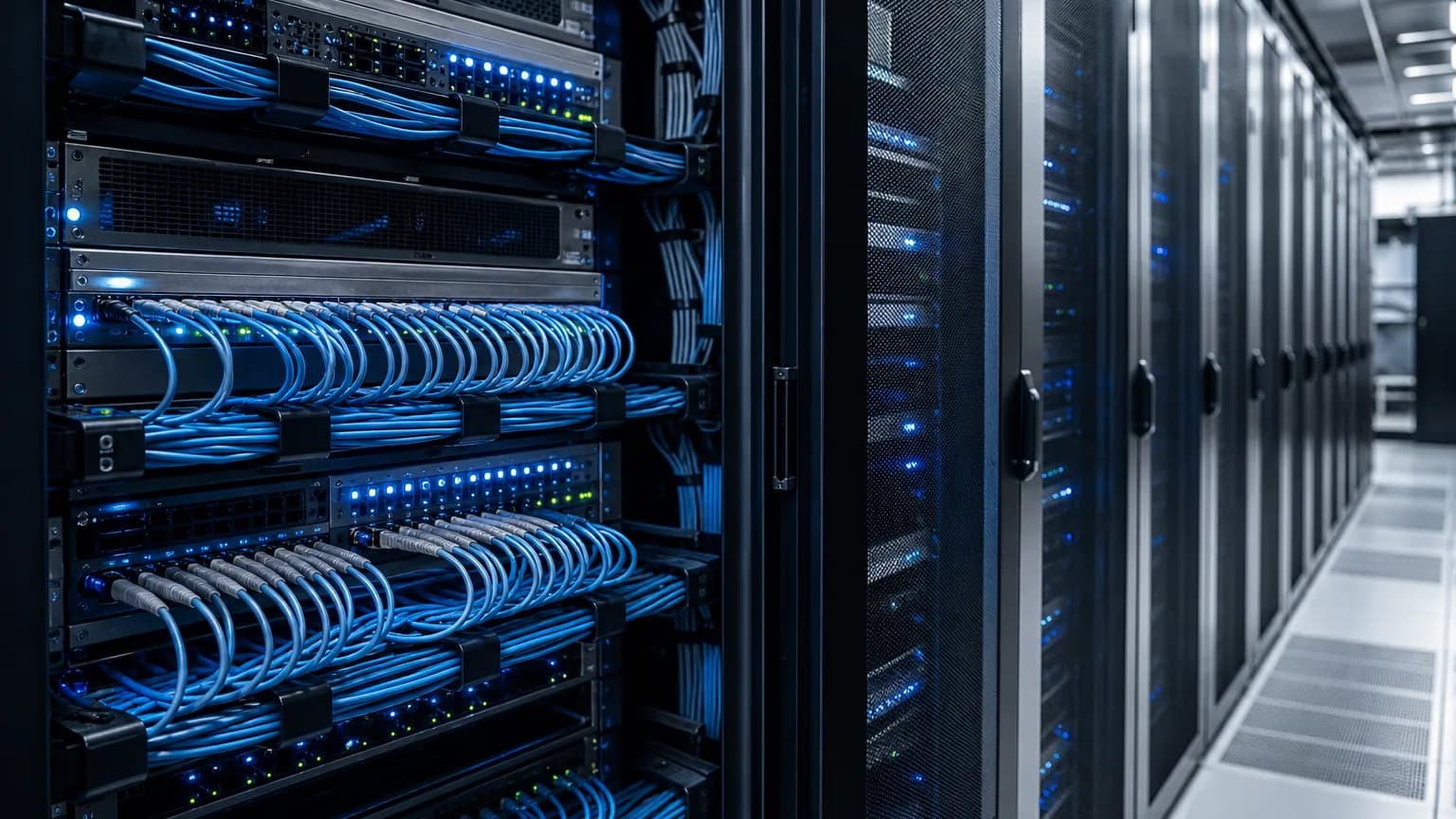
Fiber, copper, racks, and technology rooms are the layer that determines whether future systems are straightforward or destructive to add. They are engineered, labeled, tested, and documented as a serviceable asset.
- Single-mode and multimode fiber backbone
- Structured cabling for data, security, and building systems
- Backbone connectivity between buildings, risers, and zones
- Racks, cabinets, and MDF/IDF environments
- Cable management, labeling standards, and testing
- Test results and as-built documentation as a deliverable
- UPS and power-continuity coordination with the electrical team
03 · Network and connectivity
A network designed for the systems that will run on it.
Security cameras, access control, intercoms, AV, and building systems all become network clients. Capacity, segmentation, and remote management are planned up front rather than retrofitted after devices arrive.
- Routing and switching architecture
- Wi-Fi design and coverage planning
- VLAN and network segmentation strategy for connected systems
- Remote management and administrative access approach
- Network readiness ahead of system commissioning
- Capacity planning for expansion and future device density
04 · Physical security
Security planned as infrastructure, not as an add-on.
Entry, surveillance, and access decisions affect conduit, power, network capacity, and daily operations. Watchtower coordinates them with the rest of the environment so they are supportable after turnover.
- Video surveillance design and camera coverage coordination
- AI-assisted detection features where the selected platform supports them
- License-plate recognition where appropriate for the property
- Access control strategy across doors, elevators, and amenity spaces
- Gate and perimeter entry coordination
- Intercom, visitor entry, and call-box workflows
- Intrusion and related system integrations where approved for the property
05 · Connected property systems
The systems residents, tenants, and staff actually touch.
Communications and experience systems depend on the same backbone. Planning them together keeps interfaces clean and avoids duplicated infrastructure.
- Commercial AV for lobbies, amenity spaces, and conference environments
- Digital directories and wayfinding
- Communication and paging systems
- Smart-property integrations across connected building systems
- EV charging infrastructure coordination where applicable
- Operational interfaces for the teams running the property
06 · Delivery and lifecycle
Accountability that continues past installation day.
Installation is a milestone, not the finish line. Commissioning, documentation, training, and ongoing support determine whether the property stays operable in year three.
- Installation coordinated against the construction schedule
- Testing and system-by-system verification
- Commissioning as one integrated environment
- As-built documentation and operating records
- Owner and operator training at turnover
- Preventive maintenance and service coordination
- Watchtower OS as the operating and documentation layer
- Monitoring and lifecycle programs where contracted
- Ongoing optimization and expansion planning
What this produces
Practical results for ownership.
Coordinated low-voltage delivery is not an abstraction. It changes what the project team experiences during construction and what the operating team inherits afterward.
- Fewer avoidable conflicts between trades during construction
- Protected pathways, risers, and technology spaces
- Better system compatibility across security, access, network, and AV
- Clearer scope and budget visibility during preconstruction
- Cleaner commissioning and a more predictable turnover
- Documentation the operating team can actually use
- One accountable relationship after occupancy
- A property positioned for future technology without destructive retrofit
What ownership gains
Practical outcomes—not conceptual slogans.
Watchtower exists to change what ownership inherits: clearer coordination, fewer late surprises, operable systems, usable documentation, and a partner who stays accountable after go-live.
Better coordination
Architects, GCs, electrical, and low-voltage trades work from one infrastructure plan instead of competing scopes.
Fewer change orders
Pathways, rooms, power, and capacity are decided early—before construction locks options and forces late technology rework.
Simpler operations
Access, security, networking, and visibility are designed for the teams who will run the property every day.
Cleaner documentation
Ownership inherits usable records and system relationships—not scattered PDFs and installer tribal knowledge.
Long-term accountability
One partner remains responsible after installation for stewardship, maintenance continuity, and future planning.
Common questions
Questions developers and owners ask.
Straight answers about scope, timing, and what happens after the project closes.
What counts as low-voltage infrastructure?
In commercial property it generally covers structured cabling and fiber, networking, video surveillance, access control, intercom and entry, AV and communications, and the connected building systems that ride the same backbone—plus the pathways, technology rooms, and power continuity that support them.
When should Watchtower be involved?
As early as schematic design or basis-of-design. Pathways, riser locations, technology-room size, and backbone capacity are inexpensive to get right on paper and expensive to correct after construction. Watchtower also engages on existing properties and modernization programs.
Does this apply to existing buildings?
Yes. On an existing asset the work starts with assessing what is installed, what is documented, and what is actually supportable—then sequencing improvements so operations are not disrupted.
How does Watchtower work with the general contractor?
As the coordinated low-voltage partner inside the project team. That means participating in design coordination, submittals, trade sequencing, and field decisions—so pathway and room work happens before finishes rather than after.
Is Watchtower tied to specific manufacturers?
Watchtower designs for long-term flexibility and serviceability, then implements the solutions approved for the property. Public pages do not claim manufacturer endorsements or partnership status.
What happens after turnover?
Documentation and operating records stay available through Watchtower OS, and ongoing support is available through the lifecycle programs. Program scope is defined per property rather than sold as a fixed package.
Next · Lifecycle
Infrastructure needs someone accountable after it is installed.
Lifecycle programs cover preventive maintenance, infrastructure oversight, entry operations, and service response.
Bring the low-voltage environment under one plan.
Share drawings, an existing property, or a portfolio question. We will map the systems involved, the coordination required, and the clearest sequence forward.